
Website Design and SEO for Contractors
Contractor Web Design built to turn trust into qualified project leads.
Contractor Web Design connects your services, completed work, local reputation, mobile experience, and estimate path in one credible website.
Strategy Before Styling
Contractor Web Design starts with the work you want and the customers you need.
A useful contractor website serves homeowners, property managers, builders, and commercial clients. It explains your services, experience, service area, and next step before they contact your team.
Plan the Complete Customer Journey
Build the website around how contracting work is actually awarded.
A homeowner may first check whether you handle the project, serve the community, and have relevant completed work. A property manager may care about responsiveness, scheduling, documentation, and the ability to support several locations. Meanwhile, a general contractor may need to confirm scope, trade experience, insurance, and communication before requesting a bid. The website should help each visitor evaluate fit without forcing everyone through the same generic sales pitch.
Discovery begins with the work your company wants more of. We identify priority services, profitable projects, geographic limits, customer questions, and seasonal demand. We also document information your team repeats during early calls. Therefore, the sitemap grows from real opportunities. It does not come from a copied template or an unfiltered list of past work.
Contractor Web Design also needs a clear conversion plan. Some visitors are ready to call immediately. Others need project examples, service details, reviews, financing information, or a better understanding of the process. Visible phone links and estimate requests give each visitor a practical next step. Contextual calls to action support that choice without turning every section into an aggressive sales pitch.
Connect proof with the decision it supports.
Proof should appear close to the claim it supports. Project photography, before-and-after comparisons, team experience, licenses, warranties, and customer feedback can strengthen trust. However, every item must remain accurate and current. We connect each proof point to the service or decision where it matters instead of building one crowded credential block.
Minnesota Design Studio brings this customer-facing structure into an editable WordPress system. As a result, your team can update services, galleries, service areas, staff, seasonal messages, and company news. Those routine changes do not require rebuilding the page. The finished site supports both prospective customers and the people responsible for keeping your information accurate.

A Clearer Path to the First Conversation
Help prospects understand what happens before they request an estimate.
Some visitors know exactly what they need. Others arrive with a problem, an unfinished idea, or a project that still needs definition. Your website can support both paths with practical service information and useful examples. It can also explain what the first conversation includes.
Websites for Contractors and Skilled Trades
Contractor Web Design built for the way your company sells and serves.
The strongest solution comes from your trade, service mix, project size, sales cycle, geographic reach, crew capacity, and goals. It does not come from a generic construction layout.
From Search to Scheduled Work
Contractor Web Design should connect your reputation with the next qualified lead.
Clear services establish fit, while real project proof strengthens trust. Focused calls to action help the right customer call, request an estimate, or share project details.
Services, Project Proof, and Estimate Paths
Contractor Web Design should organize services, completed work, and trust.
Prospects need enough detail to recognize a good fit and enough evidence to feel confident. They also need a contact path that respects how real projects begin.

Make Project Fit Easier to Evaluate
Turn contractor experience into clear, decision-ready content.
A service page should do more than name a trade. It can explain strong project fits, customer situations, relevant materials, the general process, and planning considerations. It should also make the next step clear. Therefore, every page helps the visitor decide whether a conversation is worthwhile.
For example, a remodeler may need separate paths for kitchens, bathrooms, basements, additions, and whole-home renovations. A plumbing company may need pages for repairs, water heaters, remodel plumbing, hydronic systems, and new construction. A roofing contractor may need distinct information for replacement, repair, inspections, storm-related work, materials, and warranties. The website should reflect confirmed services and current capacity rather than promising every possible job.
Next, project proof should appear near the service it supports. Wide photography can establish quality, while detail images can show craftsmanship. Before-and-after pairs explain the transformation, and concise project summaries provide context. In addition, captions should explain why each image matters. An unlabeled photo rarely communicates scope, material, or complexity by itself.
Keep the estimate path realistic and maintainable.
The inquiry experience deserves the same planning. A first-contact form may ask for contact details, property location, project type, desired timing, and a short description. Photos or document uploads may help when the business is ready to manage them. However, the form should remain realistic for an early conversation. It should not make a good prospect complete an entire estimate first.
Finally, reusable page patterns keep the system maintainable. New services, projects, communities, team members, and resources should follow the same content hierarchy. That consistency helps the site evolve with the company. Explore our complete professional web design services for strategy, responsive design, WordPress development, accessibility, and long-term support.
Mobile Leads and Better First Conversations
Contractor Web Design makes it easier to request the right service or estimate.
Useful content and focused forms help prospects share enough context for a productive response without creating unnecessary friction.
Support the Next Customer Question
Organize each page around the decision that comes next.
Prospects may arrive through a service search, city page, social post, referral link, vehicle graphic, or company-name search. Each entry point needs enough context to establish what you do, where you work, and which action makes sense next. Therefore, related service links and representative projects should create a connected path. Process summaries and visible contact options should support that path instead of becoming isolated page elements.
Calls to action can change with intent. A repair visitor may need a prominent phone option and clear availability information. Someone planning a major renovation may prefer a consultation request, project questionnaire, or portfolio path. Commercial prospects may need a direct business contact or a way to describe the property. The design should support those differences without creating a confusing menu of competing buttons.
Mobile behavior is especially important for contractor websites. Customers often search while standing near the problem, talking with another decision-maker, or moving between properties. Phone links, form fields, service navigation, project images, and maps must remain easy to use on a smaller screen. In addition, important information should appear quickly. A slow page can send the visitor back to the search results.
The response expectation also needs honest wording. If the business does not offer round-the-clock emergency service, the website should not imply it does. If estimates require an on-site visit, that should be clear. Timelines may vary by service, location, season, or project size. The page can explain the next step without promising an unsupported schedule.
Keep the lead path useful for both the customer and the office.
A strong form collects useful details and confirms that the submission was received. It also needs to support the actual follow-up process. Routing, notifications, spam protection, analytics, and confirmation messages should be tested together. That testing protects the complete experience beyond the visible design.

A Practical Mobile Experience
Make the important action easy without hiding the information behind it.
The phone number, estimate option, service area, and relevant service details should remain easy to find. Clear hierarchy helps the visitor act when ready while still giving careful customers the proof they need before contacting you.
Local Trust and Business Development
Contractor Web Design connects online visibility with the people and work behind your company.
Accurate service areas, experienced people, recognizable projects, and consistent follow-up build local confidence. Together, they show prospects what stands behind the company name.

Show the People Behind the Work
Use real business details that help prospects feel confident.
Current team photography, service vehicles, equipment, project environments, and clear company information can strengthen recognition and trust. Each detail should remain accurate, professionally presented, and easy for the business to update when people or equipment change.

Align the Website with Sales and Scheduling
Measure useful inquiries instead of celebrating empty traffic.
Marketing data matters when it connects to calls, estimate requests, priority services, communities, and follow-up. A clear measurement plan identifies pages that support real conversations. It does not pretend every visitor is a qualified lead.
Build service-area content that helps people, not a wall of duplicate city pages.
Contractors often serve several cities, counties, or regions. A useful structure explains where the company works, which services apply, and how nearby customers should respond. It can also clarify travel or scheduling limits when relevant. Distinct local pages can support search when they include useful community or service information. Replacing city names across dozens of nearly identical pages does not create a stronger local presence.
Business information also needs to stay consistent across the website and trusted listings. Names, addresses, phone numbers, hours, service categories, and links should reflect the real operation. Our Google Business Profile optimization and local SEO services can connect those details with useful location and service content.
However, contractor visibility reaches beyond search. Project updates, maintenance tips, seasonal information, community involvement, hiring news, and completed work can support other channels. They may create useful email, social media, and referral conversations. Explore our social media marketing services when the website is part of a broader contractor content plan.
Visibility, Speed, and Lead Quality
Contractor Web Design with local SEO, performance, and lead tracking.
Contractor Web Design works harder when search structure, service content, mobile usability, and page speed support one strategy. Inquiry measurement then connects that work to business development.
Service Search Visibility
Create useful landing pages for the work your team wants.
Search visibility begins with crawlable navigation, descriptive headings, meaningful copy, accurate metadata, and contextual internal links. The structure should also connect services, projects, and locations. In addition, individual service pages can answer real customer questions instead of repeating one short company description.
Search language should reflect how customers describe the need. People may search by trade, service, problem, project type, material, property type, urgency, or location. The page still needs natural writing and verified experience. A list of every keyword variation does not create a trustworthy resource.
Google’s SEO Starter Guide emphasizes clear organization, descriptive links, useful images, and understandable page information. Our search engine optimization services connect those fundamentals with the services and geographic reach your company can actually support.
Local Relevance and Reputation
Help nearby customers understand where and how you work.
Local contractor searches often include a city, neighborhood, nearby landmark, service phrase, or immediate problem. Service-area content should answer that intent accurately. It should not claim a staffed location where none exists or target communities the company rarely serves.
Reviews can support reputation when they are authentic and handled responsibly. The website may feature selected feedback and link to relevant review profiles. It can explain project context when permission and accuracy are confirmed. Meanwhile, review requests and responses should follow platform policies. They also need to reflect the business’s real customer-service process.
Consistent contact information, useful internal links, permanent URLs, and redirect planning also protect visibility during a redesign. Old project links, service pages, campaigns, and referral URLs should not quietly disappear when the new structure launches. A documented redirect map helps customers and search engines reach the best available replacement.
Performance and Lead Measurement
Keep project media from slowing the path to contact.
Contractor pages can become heavy when photos, video, galleries, maps, fonts, analytics, widgets, and forms compete for the first load. We identify which assets support the visible experience. Then, we delay or remove work that does not need to happen immediately.
Therefore, correct image dimensions, modern formats, responsive sources, caching, and stable layout geometry support a faster website. Restrained animation and careful plugin selection help as well. Mobile testing remains essential because customers may search from a property, vehicle, jobsite, or slower connection.
Lead measurement should respect the real sales cycle. Form submissions, phone actions, estimate starts, important service-page paths, and campaign sources may provide useful signals when configured appropriately. Our website performance services focus on measured improvements while preserving accessibility, forms, analytics, and the project content customers need.
From Discovery to Launch
A practical Contractor Web Design process for stronger lead paths.
Each stage connects business goals, service content, project proof, visual design, website administration, and dependable testing without visible step numbers.
Understand the business and opportunity.
We document services, projects, service areas, audiences, current content, sales priorities, and seasonal patterns. Administrative needs and common customer questions also shape the recommended structure.
Map content and lead paths.
Services, projects, proof, navigation, service areas, phone actions, forms, uploads, and calls to action are planned around representative customer journeys.
Design repeatable contractor components.
Approved page patterns establish hierarchy, imagery, service details, project proof, responsive behavior, accessibility, and consistent brand treatment across the website.
Build and populate carefully.
We implement WordPress, page templates, media, forms, SEO fields, redirects, and approved integrations. Administrative workflows stay within the agreed project scope.
Test the complete experience.
Testing covers responsive layouts, forms, navigation, keyboard access, representative images, page speed, analytics, metadata, and redirects. We also check content accuracy and applicable launch controls.
Minnesota Design Studio
Choose a Contractor Web Design partner who understands local service businesses.
Ross Lund and Minnesota Design Studio are based in Mankato, MN. We help contractors with new websites, redesigns, service content, project galleries, local SEO, and focused WordPress improvements. We inspect what is already working before recommending a scope.
Some contractors need a complete visual and technical rebuild. Others gain more value from improving service pages, project photography, navigation, location content, mobile behavior, forms, performance, or search structure. Therefore, the recommendation should fit the company’s sales cycle, crew capacity, office workflow, available content, and budget. Maintenance needs and goals matter too. We do not force every contractor into the same package.
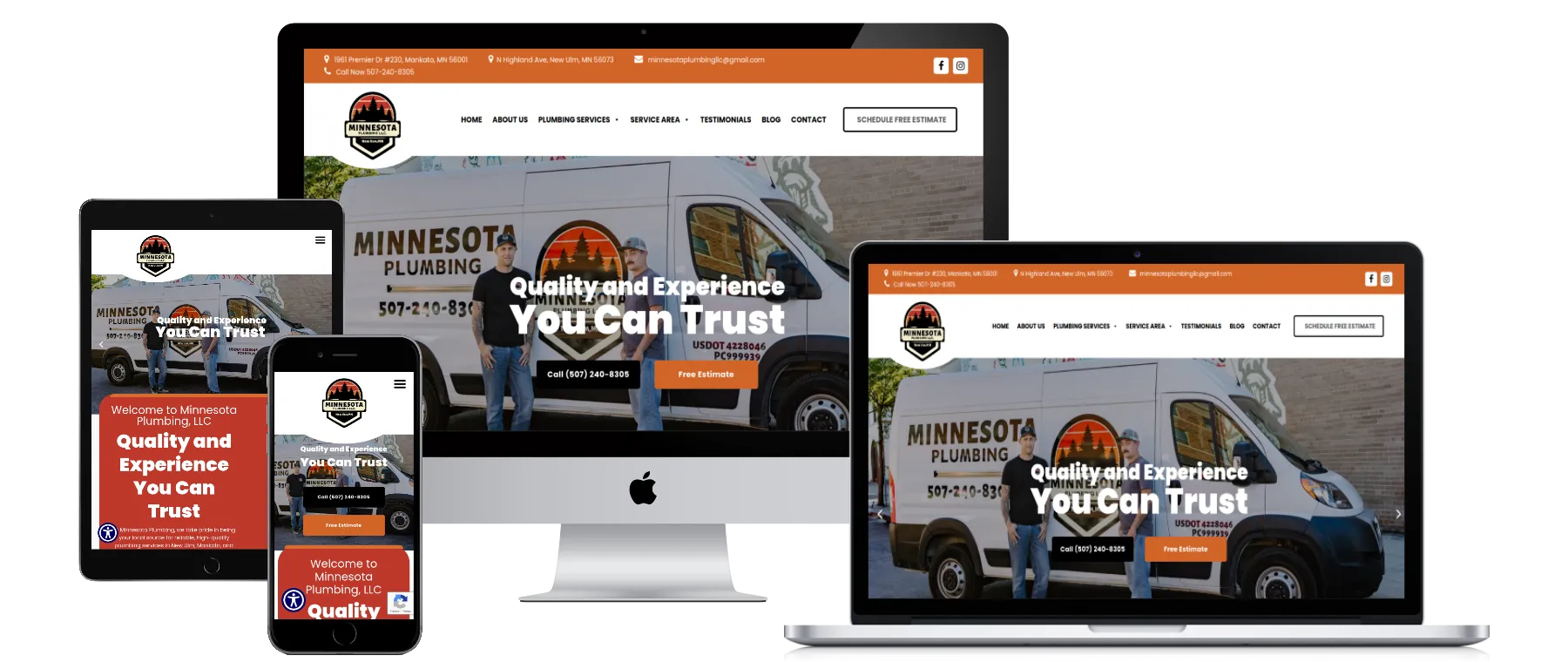
The featured Minnesota Plumbing website presents broad services, two primary markets, local trust, and clear estimate paths. Those elements work together within one focused customer journey. Browse our website design portfolio for additional examples across different organizations and industries.
Build a Better Contractor Website
Start your Contractor Web Design project.
Tell us which services matter most, where your team works, and what projects you want to attract. Also, show us where the current website creates friction. Then, we will identify a practical next step for design, service content, project proof, local SEO, lead paths, or performance.
Start Your Contractor Website Project
Ready to build a contractor website that makes the next call easier?
Tell us what your company does, where you work, which projects you want, and what is creating friction today. We will help define a practical scope for a new website, redesign, service-content system, local contractor SEO plan, or focused performance work.
Free Consultation
Request a Free Quote
Send over the basics and we will follow up with practical next steps.