
Web Design and SEO for Roofing Companies
Roofing Web Design built to turn local searches into qualified estimate requests.
Roofing Web Design connects clear services, convincing project proof, local visibility, fast mobile performance, and focused estimate paths in one dependable website.
Strategy Before Styling
Roofing Web Design starts with the jobs you want, the areas you serve, and the way your team sells.
A useful roofing website supports homeowners, property managers, facility teams, insurance-related searches, referral partners, and people comparing bids. Therefore, its structure should reflect real services and real sales conversations.
Plan the Complete Lead Journey
Build the website around how property owners recognize a need and choose a roofing company.
One homeowner may search for a roof replacement after noticing curled shingles. Another may need storm damage inspected quickly. Meanwhile, a property manager may be comparing maintenance programs for several commercial buildings. Each person arrives with different urgency, knowledge, and proof requirements. The website should help all of them identify a relevant service without pushing every visitor through one generic sales message.
Discovery begins with the work the company actually wants to sell. We identify residential and commercial priorities, preferred systems, repair capabilities, inspection processes, service areas, crew capacity, certifications, financing information, warranties, seasonal demand, and related exterior services. Next, we connect those details to the questions estimators hear before, during, and after a site visit. As a result, the sitemap supports both search visibility and a more useful first conversation.
Roofing company web design also needs an honest geographic plan. Some contractors serve a focused local market, while others cover multiple states or travel for specific commercial systems. Therefore, location content should explain where crews work, which services apply, and how availability changes. It should not imply a permanent office or immediate response where neither exists.
Connect project proof with the estimate path.
Project proof matters because roofing is difficult to evaluate from a service list alone. For example, homeowners want to see finished homes, materials, details, and workmanship. Commercial decision makers may want system types, property categories, safety practices, maintenance experience, and project scale. Consequently, photography and project notes should connect to the service they support instead of living inside one unstructured gallery.
Estimate paths need similar planning. Some visitors are ready to call, while others want to share an address, project type, concern, timeline, and preferred contact method. In addition, storm-related visitors may need guidance about temporary protection, inspections, and documentation. A focused form can collect the basics without asking people to write an entire project history on a phone.
Connect credibility with the decision it supports.
Licenses, insurance, manufacturer credentials, safety practices, warranties, reviews, years in business, crew photography, and community involvement can strengthen trust. However, each detail works best near the related question. Therefore, we distribute proof throughout service, project, location, and contact content instead of expecting one badge strip to carry the whole sales argument.
Minnesota Design Studio brings that strategy into an editable WordPress system. Consequently, the company can add completed projects, update service areas, refine material information, publish seasonal guidance, adjust calls to action, and maintain team information without rebuilding the website. The design remains consistent while the content grows with the business.

A Clearer Route to an Estimate
Help visitors understand what happens before work begins.
Some property owners know the system they need. Others are comparing materials, documenting damage, reviewing financing, or deciding whether a repair is still practical. Therefore, the website should explain the first step, show relevant proof, and set a realistic response expectation before asking for contact information.
Likewise, every conversion path should match the office workflow. A form is only useful when the right person receives it, the confirmation is clear, and follow-up happens consistently. We plan the visible page and the operational handoff together.
Websites for Roofing Contractors
Roofing Web Design built for the work your company is prepared to deliver.
The strongest solution comes from your services, crews, materials, sales process, market, and growth goals. It does not come from a generic contractor theme filled with interchangeable claims.
From Search to a Qualified Estimate
Roofing Web Design should connect the property, the problem, and the right next step.
Clear service information establishes fit, while projects, reviews, credentials, and local details strengthen confidence. Then, focused actions help the visitor call, request an inspection, ask for an estimate, or continue comparing options with better information.
Services, Projects, and Proof
Roofing Web Design should make capabilities easy to verify.
Property owners need enough detail to recognize a fit and enough evidence to trust the company with a high-value exterior project. Therefore, services, projects, reviews, and estimate paths should reinforce one another.

Make Service Fit Easier to Evaluate
Turn trade expertise into clear, decision-ready content.
A residential roofing page should do more than say the company installs shingles. It can explain replacement and repair priorities, inspection expectations, material options, ventilation, flashing, cleanup, warranties, financing guidance, and how the estimate begins. Likewise, a commercial page can clarify systems, coatings, repairs, inspections, maintenance, property types, safety planning, and documentation. The goal is not to publish a technical manual. Instead, each page should answer the questions that help a buyer decide whether to contact the company.
Related services need their own hierarchy. Gutters, siding, windows, insulation, pole buildings, and storm restoration may create valuable work. However, they should not blur the primary roofing path. We connect each offering through contextual links and reusable service patterns. As a result, visitors can move between related needs without losing the main action.
Project galleries continue that work when they include useful context. For example, a project entry can identify the general location, property type, roof system, scope, material, challenge, and completed result without publishing private customer details. Before-and-after images can help as well when the comparison is honest and the photos share a consistent crop and quality level.
Use reviews and credentials where they answer a real concern.
Reviews can support workmanship, communication, cleanup, scheduling, and follow-through. Meanwhile, manufacturer credentials, licenses, insurance, warranties, safety practices, and professional memberships support different questions. Therefore, the website should place these signals near services, projects, and calls to action instead of crowding every badge into the top of the page.
Estimate forms also need restraint. A property address, project type, general concern, preferred contact method, and optional photo upload may be enough to begin. In addition, clear consent language, useful errors, spam protection, and a dependable confirmation improve the experience. The company can collect more detail during follow-up once the lead has reached the correct person.
Finally, a reusable project system keeps new proof manageable. Office staff should be able to add images, summaries, services, locations, and related links without designing each entry from scratch. Explore our complete professional web design services for strategy, responsive design, WordPress development, accessibility, and long-term support.
Mobile Leads and Storm Response
Roofing Web Design makes estimate and inspection paths easier to use from the property.
People often search while looking at damage, standing in a driveway, or comparing bids away from a desk. Consequently, the most useful information and actions must work well on a phone.
Support the Next Customer Question
Organize each page around the decision that comes next.
Visitors may arrive through a roof repair search, a map listing, an insurance referral, a neighborhood recommendation, a yard sign, a social post, or a manufacturer directory. Each entry point needs enough context to explain what the company provides, where crews work, and which action makes sense. Therefore, related service, project, review, and service-area links should create a connected path instead of isolated landing pages.
Calls to action can change with intent. A homeowner with active damage may prefer a phone call. Meanwhile, someone planning a replacement may want an estimate form and material information. A commercial property manager may need inspection details, maintenance options, and a direct business contact. In addition, current customers may need production updates or warranty support rather than a new-lead form.
Mobile behavior is especially important after a storm. People may be using cellular data while power or internet service is unreliable. As a result, phone links, service details, forms, photo uploads, insurance guidance, and confirmation messages should load quickly and remain easy to use. The website should also avoid panic-driven promises that the company cannot consistently meet.
Response expectations need honest wording. For example, if the office reviews requests during business hours, the page should say so. If emergency tarping depends on crew availability or location, that distinction should be clear. Likewise, the website can explain that an inspection is not the same as insurance coverage approval. Accurate expectations protect trust before the estimator arrives.
Keep the lead path useful for both the visitor and the office.
A strong form collects enough information to route the request and confirms that the submission was received. However, the operational details matter too. Notifications, assignment, spam control, photo handling, analytics, response ownership, and follow-up timing should be tested together. Consequently, the visible design supports a dependable internal process.

A Practical Mobile Experience
Make the important action easy without hiding the proof behind it.
The phone number, estimate option, service area, office hours, project examples, reviews, financing guidance, and relevant service details should remain easy to find. Clear hierarchy helps ready visitors act. Meanwhile, careful readers still receive the information they need before inviting a contractor to the property.
Finally, fast pages protect every lead source. Paid clicks, map visibility, referrals, and organic search all lose value when the website stalls on a phone. Performance belongs in the conversion plan from the beginning.
Local Trust and Service-Area Clarity
Roofing Web Design connects local visibility with the crews and systems behind the work.
Accurate locations, representative projects, useful reviews, clear communication, and dependable follow-up build confidence. Together, they show what stands behind the company name.

Residential and Commercial Clarity
Separate different buying journeys without splitting the brand.
Homeowners and facility teams may need the same company for very different reasons. Therefore, navigation and landing pages should distinguish the services, proof, terminology, forms, and response expectations that apply to each audience. Shared brand elements can still keep the experience connected.

Align Visibility with Capacity
Measure useful roofing leads instead of celebrating empty traffic.
Marketing data matters when it connects to calls, estimate requests, inspections, priority services, communities, and follow-up. Consequently, a clear measurement plan identifies pages that support real sales conversations. It does not pretend every visitor is a qualified roofing lead.
Build service-area content that helps property owners, not a wall of duplicated city pages.
A roofing company may serve one metro, several rural counties, multiple states, or a specialized commercial territory. A useful structure explains where crews work, which services apply, and how visitors should respond. Specifically, distinct location pages can support search when they include real projects, service details, local conditions, travel expectations, and customer guidance. Replacing one city name across dozens of identical pages does not create a stronger local presence.
Business information also needs to remain consistent across the website and trusted listings. Names, addresses, phone numbers, hours, service categories, appointment links, and service-area settings should reflect the real operation. In addition, Google’s guidelines for representing a business explain important requirements for business identity, locations, service areas, and eligible profiles. Our Google Business Profile optimization and local SEO services connect those listing details with useful service and project content.
Reviews work best when the request and response process is consistent. For example, completed residential work may generate feedback about communication, cleanup, and workmanship. Commercial relationships may produce fewer public reviews, yet detailed project proof and references can still support trust. Therefore, the website should use the reputation assets the company can maintain rather than inventing a one-size-fits-all review strategy.
Local visibility also reaches beyond search. Project updates, material education, maintenance guidance, community sponsorships, crew introductions, hiring news, and storm preparation can support other channels. Likewise, those topics may create useful email, referral, and social conversations. Explore our social media marketing services when the website is part of a broader roofing content plan.
Search Visibility, Performance, and Measurement
Roofing Web Design with local SEO and lead-focused performance.
Roofing Web Design works harder when search structure, service content, project proof, mobile usability, performance, and measurement support one strategy. Then, reporting can connect that work to qualified inquiries and completed jobs.
Service Search Visibility
Create useful landing pages for the work property owners are seeking.
Search visibility begins with crawlable navigation, descriptive headings, meaningful copy, accurate metadata, useful images, and contextual internal links. The structure should connect services, projects, materials, service areas, reviews, and estimate paths. In addition, individual pages should answer real questions instead of repeating one short company description.
Search language should reflect how customers describe the problem. For example, they may search by repair need, material, storm damage, building type, roof system, inspection, coating, location, warranty concern, or contractor name. However, the page still needs natural writing and verified experience. A list of every keyword variation does not create a persuasive roofing resource.
Google’s SEO Starter Guide emphasizes clear organization, descriptive links, useful images, and understandable page information. Therefore, our search engine optimization services connect those fundamentals with the services, projects, and communities the contractor can actually support.
Local Proof and Conversion Paths
Connect the search result with evidence that matches the job.
A city or service landing page should lead to more than a phone number. Instead, it can connect visitors with relevant projects, material guidance, reviews, credentials, warranties, and an estimate path. This context helps property owners evaluate the company before calling. Consequently, SEO content and conversion design support the same decision.
Internal links also guide visitors and search engines through the website. Service pages can connect to projects, related systems, maintenance information, service areas, and contact options. Likewise, project pages can link back to the service and location they demonstrate. Descriptive links clarify the relationship better than repeated prompts to click here.
Redirect planning protects that structure during a redesign. Old service URLs, project entries, location pages, campaign pages, and popular resources should not quietly disappear. Therefore, we document useful existing paths and map them to the best replacement. Permanent URLs and tested redirects help preserve both user access and earned search value.
Speed and Lead Measurement
Keep project imagery and marketing tools from slowing the path to action.
Roofing pages can become heavy when galleries, videos, maps, financing widgets, review feeds, chat tools, fonts, analytics, and forms compete for the first load. We identify which assets support the visible experience. Then, we delay or remove work that does not need to happen immediately.
Correct image dimensions, WebP files, responsive sources, caching, stable layout geometry, and careful plugin selection support a faster site. In particular, representative mobile testing reveals problems that a fast office connection can hide. Our website performance services focus on measured improvements while preserving the proof and content customers need.
Finally, measurement should follow the actual lead process. Calls, forms, service-page actions, location interest, and estimate confirmations can reveal useful patterns. However, the dashboard should not claim revenue without dependable sales data. We define practical events, verify that they fire correctly, and connect marketing reports to the information the company can responsibly maintain.
From Discovery to Launch
A practical Roofing Web Design process for stronger proof and better leads.
Each stage connects business goals, service content, project evidence, visual design, website administration, local SEO, lead routing, and dependable testing without visible step numbers.
Understand the company, market, and sales process.
We document services, materials, service areas, seasonality, crews, credentials, project types, lead sources, current content, sales follow-up, and the questions property owners ask before requesting an estimate.
Map services, proof, and estimate paths.
Navigation, service pages, project galleries, reviews, financing information, service-area content, phone actions, forms, and calls to action are planned around representative residential and commercial journeys.
Design repeatable roofing components.
Approved patterns establish hierarchy, imagery, service details, project cards, review treatment, responsive behavior, form placement, accessibility, and consistent brand presentation across the website.
Build and populate the website carefully.
We implement WordPress, page templates, approved project media, estimate forms, SEO fields, redirects, analytics, and integrations. Meanwhile, reusable fields keep future projects and service updates manageable.
Test the complete lead experience.
Testing covers responsive layouts, forms, phone links, navigation, keyboard access, representative devices, page speed, analytics, metadata, redirects, project filters, and confirmation messages before launch.
Minnesota Design Studio
Choose a Roofing Web Design partner who understands proof, local visibility, and qualified leads.
Ross Lund and Minnesota Design Studio are based in Mankato, MN. We help roofing contractors with new websites, redesigns, project galleries, local SEO, performance improvements, lead paths, and focused WordPress work. First, we inspect what is already working before recommending a scope.
Some companies need a complete visual and technical rebuild. Others gain more value from improving service pages, project proof, mobile behavior, forms, location content, reviews, redirects, speed, or search structure. Therefore, the recommendation should fit the contractor’s sales process, crews, content, market, budget, and long-term goals. We do not force every roofing company into the same package.
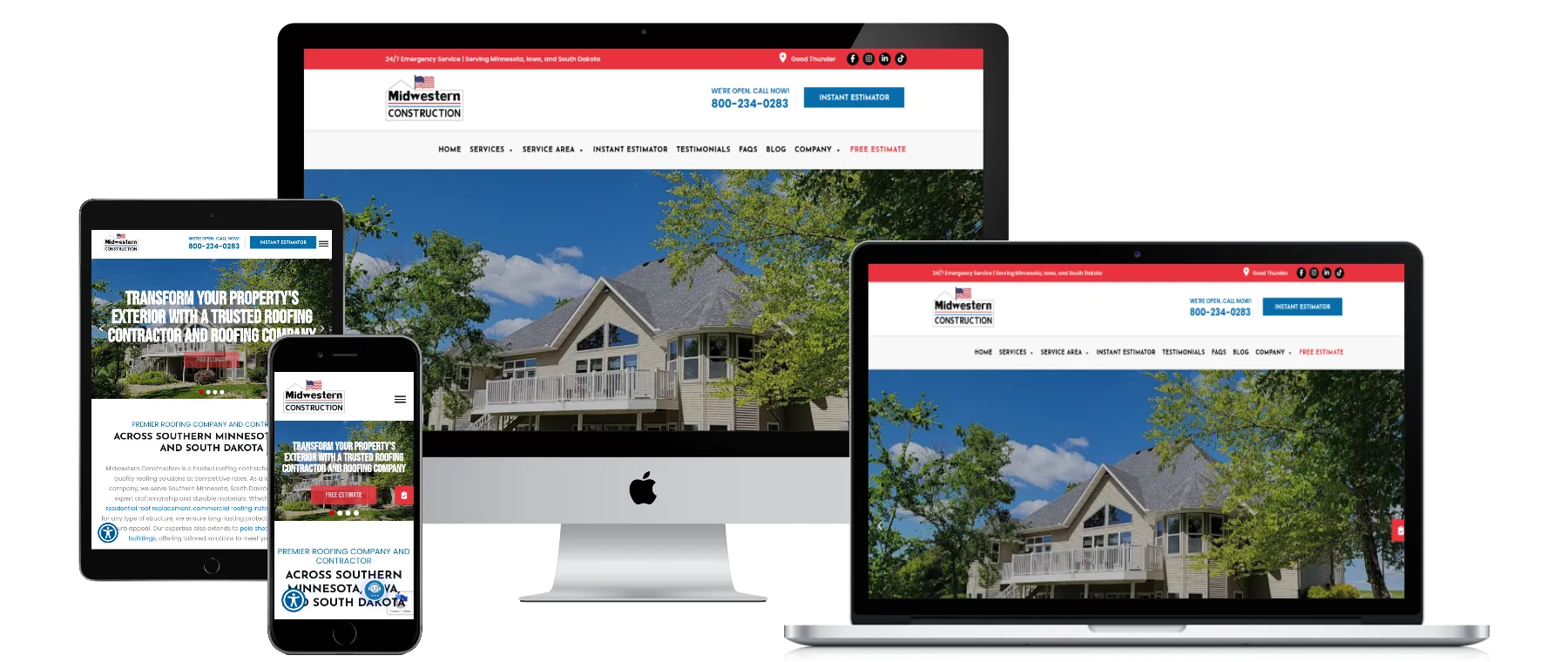
The featured Midwestern Construction website presents residential roofing, commercial roofing, pole sheds, siding, gutters, and window replacement for customers in Minnesota, Iowa, and South Dakota. Its service structure demonstrates how one exterior construction brand can clarify several capabilities without losing the primary route to contact. Browse our website design portfolio for additional examples across different organizations and industries.
Roofing company web design is most valuable when it keeps working after launch. Consequently, we consider content ownership, image handling, plugin maintenance, backups, updates, reporting, and future service growth as part of the system. The result should support the office team as well as the customer viewing the site.
Build a Better Roofing Website
Start your Roofing Web Design project.
Tell us which services matter most, where your crews work, and where the current website loses trust or leads. Also, share the estimate, inspection, project, and follow-up workflows that need to remain dependable. Then, we will identify a practical next step for design, project proof, local SEO, mobile conversions, lead tracking, or performance.
Start Your Roofing Website Project
Ready to build a roofing website that turns stronger proof into qualified opportunities?
Tell us which roofing services matter most, who you need to reach, where you work, and what currently creates friction. We will help define a practical scope for a new site, redesign, project-gallery system, service-area structure, local roofing SEO plan, mobile estimate path, or focused performance work.
Free Consultation
Request a Free Quote
Send over the basics and we will follow up with practical next steps.