
Web Design and SEO for Lawn Care

Lawn Care Web Design built to grow recurring local service leads.

Lawn Care Web Design connects seasonal services, local visibility, project proof, mobile estimates, and year-round customer relationships in one credible website.

Strategy Before Styling

Lawn Care Web Design starts with the services, seasons, and customers that drive the business.

A useful lawn care website serves homeowners, commercial property managers, associations, and year-round clients. It explains the right service at the right time and makes the next conversation easier.

Plan the Complete Customer Journey

Build the website around how lawn care work is actually selected.

A homeowner may begin with a simple question about mowing, weeds, bare areas, cleanup, or a declining lawn. A commercial manager may care more about route reliability, site appearance, insurance, communication, and service across several properties. Meanwhile, an association may need a clear scope, predictable scheduling, and one dependable point of contact. The website should help each audience understand fit without forcing everyone through the same generic pitch.

Discovery begins with the work the company wants more of. We identify priority programs, profitable add-ons, service boundaries, customer questions, busy periods, weather-sensitive services, and the limits of each crew. Then, the sitemap grows from actual opportunities. It does not come from a copied landscaping template or an unfiltered list of everything the company has ever offered.

Seasonality also affects the customer journey. Spring cleanup visitors may need fast confirmation of availability. Fertilization customers may compare program structure and application timing. Property managers planning next year’s contract may start months before service begins. Therefore, calls to action, service explanations, and supporting proof need to reflect different levels of urgency.

Lawn Care Web Design also needs a practical conversion plan. Some visitors are ready to call, while others want program details, representative results, reviews, or a better understanding of the estimate process. Visible phone links and focused estimate requests support both paths. Contextual calls to action guide the visitor without turning every section into the same sales message.

Connect proof with the service decision it supports.

Before-and-after photos, striped lawns, healthy turf, renovated beds, clean equipment, trained crews, and customer feedback can strengthen confidence. However, proof works best near the claim it supports. We connect each image or detail to a service, property type, or customer question instead of building one crowded gallery with no context.

Minnesota Design Studio brings that customer-facing structure into an editable WordPress system. As a result, the business can update services, treatment information, service areas, project images, team details, weather messaging, and seasonal availability. Routine changes remain manageable without rebuilding the page.

Lawn care web design planning session for seasonal content and service areas
A strong lawn care website begins with real services, seasonal demand, route geography, and the questions customers ask before requesting an estimate.

A Clearer Path to the First Conversation

Help property owners understand what happens before service begins.

Some visitors know the exact program they need. Others only know that the lawn looks thin, weeds are spreading, leaves are piling up, or the property is difficult to maintain. The website can support both situations with practical service information, useful examples, and a clear explanation of the first step.

Websites for Lawn, Landscape, and Snow Companies

Lawn Care Web Design built for the way your company sells and serves.

The strongest solution comes from your service mix, route density, property types, seasonal calendar, crew capacity, and growth goals. It does not come from a generic green template.

Lawn Maintenance and Mowing Companies

Present recurring mowing, cleanup, trimming, commercial grounds care, route areas, scheduling expectations, and estimate paths in a structure customers can understand.

Organize Recurring Services

Fertilization and Lawn Treatment Providers

Explain treatment programs, weed control, aeration, overseeding, insect control, application timing, property fit, and responsible next steps without burying the visitor in jargon.

Support Better Estimate Requests

Landscape Enhancement and Property Care Teams

Showcase softscape work, seeding, sod, mulch, rock, shrub care, bed renovation, project photography, and seasonal property improvements with clear service boundaries.

Build Local Trust

Year-Round Lawn and Snow Service Companies

Connect warm-season property care with snow removal, deicing, client access, weather information, commercial service, and year-round customer relationships.

Strengthen Seasonal Visibility

From Search to Scheduled Service

Lawn Care Web Design should connect seasonal demand with the next qualified lead.

Clear service information establishes fit, while real property and crew imagery strengthens trust. Focused calls to action help the right customer call, request an estimate, or share property details.

Programs, Seasonal Work, and Property Proof

Lawn Care Web Design should organize recurring services, seasonal needs, and trust.

Customers need enough detail to recognize a good fit and enough evidence to feel confident. They also need an estimate path that respects how lawn and property-care work begins.

Crew leader photographing a freshly striped commercial property for a project gallery
Property photography is strongest when the website explains the service, the site, and the result instead of showing an unlabeled lawn.

Make Service Fit Easier to Evaluate

Turn lawn care experience into clear, decision-ready content.

A service page should do more than name mowing, fertilization, cleanup, or landscaping. It can explain appropriate property types, common problems, program structure, seasonal timing, preparation, and the general estimate process. Each page should also make the next step clear. Therefore, the visitor can decide whether a conversation is worthwhile before submitting a form.

For example, a maintenance company may need distinct pages for mowing programs, spring cleanup, fall cleanup, leaf removal, shrub trimming, and commercial grounds care. A treatment provider may need useful information about fertilization, broadleaf weeds, crabgrass, aeration, overseeding, grub control, and lawn disease. A landscape team may need separate paths for sod, seeding, mulch, rock, softscape renovation, and bed maintenance. The website should reflect confirmed services and current capacity rather than promising every possible property solution.

Next, project proof should appear near the service it supports. Wide property images can establish overall quality, while detail photos show edging, turf density, bed condition, or installation work. Before-and-after pairs explain a change over time, and captions provide the missing context. An unlabeled green lawn rarely communicates the program, starting condition, or work involved.

Keep the estimate path realistic and maintainable.

A first-contact form may ask for contact information, service address, property type, requested service, approximate timing, and a short description. Photos may help when the office is ready to receive and review them. However, the form should remain realistic for an early conversation. It should not force a good prospect to measure the entire property or diagnose a turf problem first.

Recurring programs also need precise wording. If a service is available only within established routes, only for commercial properties, or only with a year-round agreement, the page should say so. Availability may change with weather, staffing, or the seasonal calendar. Clear boundaries prevent confusion and improve the quality of incoming requests.

Finally, reusable page patterns keep the system maintainable. New services, property examples, communities, team members, and seasonal resources should follow the same hierarchy. That consistency helps the site evolve with the company. Explore our complete professional web design services for strategy, responsive design, WordPress development, accessibility, and long-term support.

Explore Professional Web Design

Mobile Leads and Better First Conversations

Lawn Care Web Design makes it easier to request the right program or estimate.

Useful content and focused forms help property owners share enough context for a productive response without creating unnecessary friction.

Support the Next Customer Question

Organize each page around the decision that comes next.

Prospects may arrive through a mowing search, weed question, seasonal social post, neighborhood referral, vehicle graphic, map listing, or company-name search. Each entry point needs enough context to establish what the company does, where it works, and which action makes sense next. Therefore, related service links and representative results should create a connected path rather than isolated pages.

Calls to action can change with intent. A homeowner looking for recurring mowing may need a concise estimate form and clear route information. Someone concerned about lawn health may prefer to describe symptoms and request an evaluation. A commercial manager may need a direct business contact, proof of relevant property work, or a way to discuss several locations. The design should support those differences without presenting a confusing wall of buttons.

Mobile behavior is especially important for lawn care companies. Customers often search while standing outside, comparing a problem with nearby properties, or discussing service with another decision-maker. Phone links, form fields, service navigation, project images, maps, and client-access links must remain easy to use on a smaller screen. In addition, the useful information should appear quickly. A slow page can send the visitor back to search before the company has a chance to establish trust.

The response expectation also needs honest wording. If quotes require a property visit, the website should explain that. If some services have seasonal cutoffs or minimum program requirements, those details should be visible. Timelines may vary with weather, property size, route capacity, and requested work. The page can explain the next step without promising an unsupported response time.

Keep the lead path useful for both the customer and the office.

A strong form collects useful details and confirms that the submission was received. It also needs to support the actual follow-up process. Routing, notifications, spam protection, analytics, and confirmation messages should be tested together. That testing protects the complete experience beyond the visible design.

Field manager reviewing a mobile estimate request beside a residential property
Mobile estimate paths should make useful property details easy to share while the customer is looking at the lawn.

A Practical Mobile Experience

Make the important action easy without hiding the information behind it.

The phone number, estimate option, service area, seasonal availability, and relevant service details should remain easy to find. Clear hierarchy helps ready customers act while still giving careful visitors the information they need before contacting the company.

Local Trust and Route Development

Lawn Care Web Design connects online visibility with the crews and equipment behind the service.

Accurate service areas, experienced people, recognizable equipment, representative properties, and consistent follow-up build local confidence. Together, they show what stands behind the company name.

Local grounds crew with work trucks, a snowplow, mowers, and professional equipment
Current crew, vehicle, and equipment imagery can make local service claims more specific and credible.

Show the People Behind the Work

Use real business details that help property owners feel confident.

Current team photography, service vehicles, commercial equipment, property environments, and clear company information can strengthen recognition and trust. Each detail should remain accurate, professionally presented, and easy to update when crews, equipment, or services change.

Business owner and office manager reviewing lead charts and customer inquiries
Lead tracking is most useful when website activity connects to actual services, routes, properties, and seasonal opportunities.

Align the Website with Routes and Scheduling

Measure useful inquiries instead of celebrating empty traffic.

Marketing data matters when it connects to phone calls, estimate requests, priority programs, communities, property types, and follow-up. A clear measurement plan identifies pages that support real conversations. It does not pretend every visitor is a qualified route opportunity.

Build service-area content that helps people, not a wall of duplicate city pages.

Lawn care companies often serve a practical route rather than every community within a broad radius. A useful structure explains where the crews work, which services apply, and how nearby customers should respond. It can also clarify commercial boundaries, travel limits, or services that depend on route density. Distinct local pages can support search when they include useful service and community context. Replacing a city name across dozens of identical pages does not create a stronger local presence.

Business information also needs to stay consistent across the website and trusted listings. Names, addresses, phone numbers, hours, service categories, seasonal availability, and links should reflect the real operation. Our Google Business Profile optimization and local SEO services connect those details with useful location and service content.

However, local visibility reaches beyond search. Seasonal tips, lawn observations, completed work, route announcements, weather updates, hiring news, and community involvement can support other channels. Those topics may create useful email, social media, and referral conversations. Explore our social media marketing services when the website is part of a broader lawn care content plan.

Visibility, Speed, and Lead Quality

Lawn Care Web Design with local SEO, performance, and lead tracking.

Lawn Care Web Design works harder when search structure, seasonal content, mobile usability, and page speed support one strategy. Inquiry measurement then connects that work to route growth and business development.

Service Search Visibility

Create useful landing pages for the lawn care work your crews want.

Search visibility begins with crawlable navigation, descriptive headings, meaningful copy, accurate metadata, and contextual internal links. The structure should connect services, seasonal needs, property examples, and locations. In addition, individual pages can answer real customer questions instead of repeating one short company description.

Search language should reflect how customers describe the need. People may search by service, lawn problem, desired result, property type, season, urgency, or location. The page still needs natural writing and verified experience. A list of every keyword variation does not create a trustworthy resource.

Google’s SEO Starter Guide emphasizes clear organization, descriptive links, useful images, and understandable page information. Our search engine optimization services connect those fundamentals with the services and route geography the company can actually support.

Local Relevance and Reputation

Help nearby customers understand where, when, and how you work.

Local lawn care searches often include a city, neighborhood, nearby landmark, service phrase, or visible lawn problem. Service-area content should answer that intent accurately. It should not claim a staffed location where none exists or target communities that fall outside practical routes.

Reviews can support reputation when they are authentic and handled responsibly. The website may feature selected feedback and link to relevant review profiles. It can also add project context when permission and accuracy are confirmed. Meanwhile, review requests and responses should follow platform policies and reflect the company’s real customer-service process.

Consistent contact information, useful internal links, permanent URLs, and redirect planning protect visibility during a redesign. Old service links, seasonal campaigns, blog articles, and referral URLs should not quietly disappear when the new structure launches. A documented redirect map helps customers and search engines reach the best available replacement.

Performance and Lead Measurement

Keep property media from slowing the path to contact.

Lawn care pages can become heavy when photos, video, galleries, maps, weather tools, fonts, analytics, widgets, portals, and forms compete for the first load. We identify which assets support the visible experience. Then, we delay or remove work that does not need to happen immediately.

Therefore, correct image dimensions, modern formats, responsive sources, caching, and stable layout geometry support a faster website. Restrained animation and careful plugin selection help as well. Mobile testing remains essential because customers may search from a yard, vehicle, commercial property, or slower connection.

Lead measurement should respect the actual sales cycle. Form submissions, phone actions, estimate starts, important service-page paths, campaign sources, and seasonal demand may provide useful signals when configured appropriately. Our website performance services focus on measured improvements while preserving accessibility, forms, analytics, and the property content customers need.

From Discovery to Launch

A practical Lawn Care Web Design process for stronger local lead paths.

Each stage connects business goals, service content, property proof, visual design, website administration, and dependable testing without visible step numbers.

Understand the business and opportunity.

We document programs, seasonal services, property types, route areas, current content, sales priorities, and crew capacity. Administrative needs and common customer questions also shape the recommended structure.

Map seasonal content and lead paths.

Services, property proof, navigation, route areas, phone actions, forms, uploads, and calls to action are planned around representative customer journeys throughout the year.

Design repeatable lawn care components.

Approved page patterns establish hierarchy, imagery, program details, project proof, responsive behavior, accessibility, and consistent brand treatment across the website.

Build and populate carefully.

We implement WordPress, page templates, media, forms, SEO fields, redirects, and approved integrations. Administrative workflows stay within the agreed project scope.

Test the complete experience.

Testing covers responsive layouts, forms, navigation, keyboard access, representative images, page speed, analytics, metadata, and redirects. We also check service accuracy and applicable launch controls.

Minnesota Design Studio

Choose a Lawn Care Web Design partner who understands local service businesses.

Ross Lund and Minnesota Design Studio are based in Mankato, MN. We help lawn care and property-service companies with new websites, redesigns, seasonal content, project galleries, local SEO, and focused WordPress improvements. We inspect what is already working before recommending a scope.

Some companies need a complete visual and technical rebuild. Others gain more value from improving service pages, property photography, navigation, location content, mobile behavior, forms, performance, or search structure. Therefore, the recommendation should fit the company’s route strategy, crew capacity, office workflow, available content, budget, and long-term goals. We do not force every lawn care business into the same package.

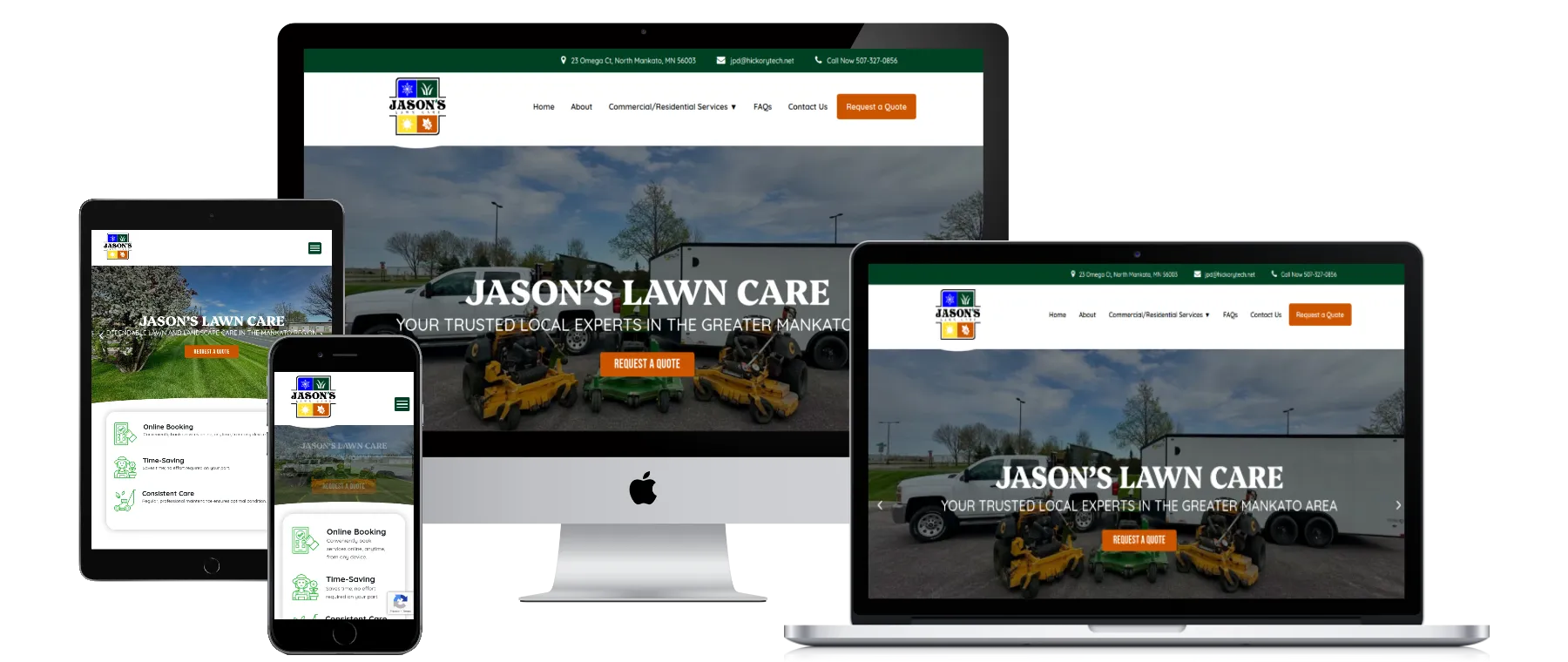
The featured Jason’s Lawn Care website organizes lawn maintenance, lawn treatments, landscape enhancements, insect control, snow removal, service areas, company information, project imagery, and estimate paths within one year-round experience. Browse our website design portfolio for additional examples across different organizations and industries.

Build a Better Lawn Care Website

Start your Lawn Care Web Design project.

Tell us which programs matter most, where your crews work, and what services you want to grow. Also, show us where the current website creates friction. Then, we will identify a practical next step for design, seasonal content, property proof, local SEO, lead paths, or performance.

Start Your Lawn Care Website Project

Ready to build a lawn care website that makes the next estimate easier?

Tell us which services matter most, where your crews work, how seasonality affects demand, and what currently creates friction. We will help define a practical scope for a new website, redesign, service-content system, local lawn care SEO plan, or focused performance work.

Recurring service and estimate strategy
Seasonal services and project proof
Mobile phone and inquiry paths
Local lawn care SEO and performance

Free Consultation

Request a Free Quote

Send over the basics and we will follow up with practical next steps.

Loading secure form...